Click on the links below to join us for the first two editions of Squared Circle Gazette Radio!
Myself, G. John Chase, Karl Jones and Luke Edwards are the panel for discussions about the following:
SCG Radio #1: Who Should Have Been The Top Guy, But Never Was?
http://squaredcirclegazette.podbean.com/mf/web/4ve68s/SCGRadio1-WhoShouldHaveBeenTheTopGuy.mp3
SCG Radio #2: Who In WWE Should Be Kept, And Who Should Be Fired?
http://squaredcirclegazette.podbean.com/mf/web/32ztns/SCGRadio2-RosterCuttingShow.mp3

Saturday, 14 June 2014

Friday, 6 June 2014
Looking At The WWE's Disgusting Ultimatum To Daniel Bryan
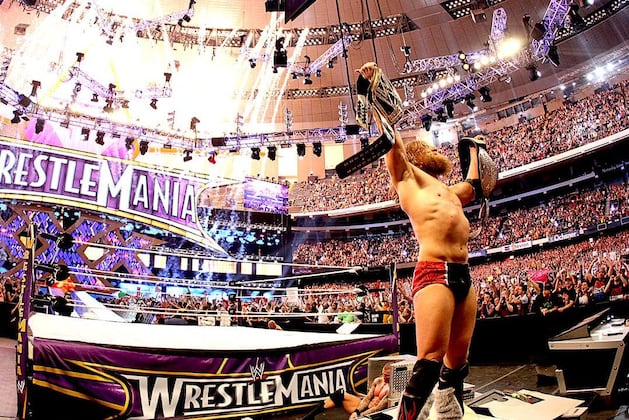
The scenario where, if he is healthy he defends his title, or if not he is stripped of the belt, does nothing but threaten everything that Bryan has ever worked for. And with his grit and determination, his staggering mental toughness, clearly he's going to do whatever he can to hold on to his dream spot. It's the nature of wrestlers, especially the ones dedicated enough to make it to the top. Looked at from his perspective, you may take the stance that it's commendable.
But looking at the WWE's decision, I find it completely appalling.
Since WrestleMania 30, Daniel Bryan has had a tough time as WWE Champion. On his very first night as King, WWE couldn't have offered a more symbolic image to its viewers: Daniel Bryan unable to stand, lying beaten in the background, as Evolution and The Shield took centre stage with their first staredown. A sign of things to come. A combination of real life events (his honeymoon with Brie Bella and the death of his father) and terrible booking (Daniel Bryan's title reign being a low enough priority that all they had for him was Kane) stalled his run from the beginning, and things only got worse when word got out that Daniel Bryan needed neck surgery. Right now he is in no position to be taking bumps, with the latest Wrestling Observer Newsletter stating that Bryan's rehab is slow going, and worse, that has been losing strength in his arm.
The Pay-Per-View is in three weeks. I understand the need to have your champion available, and to use the World Title on your big events. The company has shows to promote and all, but for putting the guy in this position, WWE need to be strapped into chairs and beaten with hammers. Have they not learned a single thing?
All this situation does, one more time, is demonstrate that underneath all the promotional bullshit, the campaigns, their Wellness policy, their rehab offers and their new initiative to help former employees go to college (WWE: The College Years needs to be Network viewing, by the way), when it comes to crunch time, they have the same bullish, ignorant mentality when it comes to the treatment of the talent that they always did.
Daniel Bryan fucks up his neck for the business. You either come back before you are ready or you lose your spot. And this won't be the first time this has happened in the last couple of years. Fandango was brought in, put over Chris Jericho at WrestleMania and treated like a hot commodity. Then he gets a concussion, and poof - all gone. Dolph Ziggler wins the World Championship, and suffers the exact same fate. Concussed and depushed. What kind of culture does this kind of mentality breed? The same one this company always did - fuck you and your health, we come first. Oh, and hide your injuries, because you'll be punished for them.
The road schedule in the 80s left a lot of casualties behind. Say what you want about the excesses of the time, and you'd be right to, but the old mentality of only being paid when you worked didn't help the massive painkiller problems and drug addictions that led to a lot of early demises. Ditto the 90s and early 2000s, where the bar was being raised and the envelope pushed, the environment encouraging guys to take incredible risks and keep on going. The results on the bodies spoke for themselves, and if they didn't, Dr. Youngblood sure would.
Daniel Bryan's win at Mania 30 led to a lot of comparisons to Eddie Guerrero and Chris Benoit from a decade earlier. Two undersized guys who, through incredible talent, broke through the roadblocks placed before them. And how did they do it? By doing things that they have no business doing to their bodies.
Eddie Guerrero defended his WWE Title against JBL at Judgment Day 2004, and was given a few weeks off afterwards, at the time believed to be as a result of a blood transfusion after his massive blade-job. As it later came out, he was actually given a break because he was told by his doctor that his back was absolutely destroyed, broken beyond belief, and that he needed to retire immediately. The pressures were getting to Eddie, and the title was taken from him.
But he carried on regardless, striving to get back to the top level, washing away the pain with high amounts of painkillers, increasing his steroid and human growth hormone use to dangerous levels in order to give his physique that extra something. We know how his story ended.
In 2001, Chris Benoit was doing diving headbutts from the top of a steel cage with a broken neck to try and get to the top. He used steroids his entire career, refusing to get off them even when he was out for a year with neck surgery, for fear of losing the slightest edge. He was renowned for his drive and focus. I'm not going to suggest the business made Benoit do what he did, but there were a lot of elements about it that stem from his desire to make it, and the pressure from the WWE, spoken or not, to do certain things that weren't healthy.
One look at an episode of Raw now reveals that the company is generally a lot cleaner on the steroids front than it has been for a while, but how the fuck WWE can't see how dangerous this decision is, and how shit-headed they are about how their decisions impact these guys lives in a negative way, is beyond me.
Even more frustrating, they don't need to take this foolish measure. This situation lends itself to a natural solution, one they should blatantly steal from the UFC - have the Money in the Bank Ladder Match be contested for the Interim WWE World Heavyweight Championship. Since they have absolutely no heels ready for Daniel Bryan right now anyway, this is the perfect way to set up a big match for Bryan upon his return to determine the real champion, one in which the fans will be behind Bryan 100% to maintain his threatened position. And more importantly than booking, it sets a positive precedent and sends the right message to the guys.
Instead, you're rushing this guy back, and the match you're making him risk his health for is against Kane? WHY!?!?
I know the counter-argument. Daniel Bryan can say no. And you know what, if his neck is that bad, then he should. Because he doesn't want the fate of the guys who said "YES!"
Sunday, 1 June 2014
The Ceiling Of Cesaro

As 2014 began, it became readily apparant that the man formerly known as Antonio Cesaro was gaining some tangible momentum, based on a number of stellar in-ring performances that highlighted his unique strength and distinctive style. WWE was able to parlay that momentum into a tremendous spot at WrestleMania, where Cesaro hoisted up Big Show, carried him across the ring and slammed him to the arena floor below. 24 hours later, and he was introduced as the newest Paul Heyman Guy, the sky seemingly the limit for the WWE's newest big time prospect, who now appeared to be as complete an act as ever.
Of course, the eventual destination of this alliance looks to be a babyface turn and an encounter with Brock Lesnar, a match custom made for Cesaro to look incredible in defeat. But as we stand today on the verge of the biggest push of Cesaro's career, it's time to be realists, and ask ourselves the tough question - does Cesaro have the goods to be a true top guy? As things stand right now, unfortunately, my gut instinct tells me no.
As good as he is (and he is) in the ring, there have been very, very few examples in history where that alone has been enough to get somebody to that top level, and a lot of the other elements needed don't appear to be there at this time in Cesaro's act. When you look at the entire package - the name, the music, the look, the promo, the charisma - if you had to score him on each criteria, even his most ardent fans would have to admit that he wouldn't score high on many of them. Once you're at the show, he is one of the most entertaining aspects of it, but he's not the guy that makes you buy the ticket. Don't get me wrong, I'm not saying every single person needs all the bells and whistles, and I understand that he's intended to come off like a throwback, a bare-bones minimalist.
But let's look at that counter-point, that you can be a bare-bones minimalist in wrestling and get over huge. Because that is the argument for him. Look at the ones who did it successfully, and there is a massive difference between them and Cesaro.
Steve Austin was a bare-bones minimalist, but he has charisma out the ass, and more personality in his middle finger than Cesaro has been able to show thus far in his WWE run.
Taz was a great minimalist in ECW, but he could talk the talk, came off like a badass, had intensity for days, and had the entire Heyman presentation magic around him to back him up.
Arn Anderson was a great example of a guy presented as a straight wrestler, a no-nonsense ass kicker. But Arn was also one of the best promo guys in the business. And despite that, he was never considered for the top spot.
Goldberg never spoke during his peak of popularity, but he was protected to such an strong degree that the comparison is immediately void. And besides, Goldberg had a physical charisma and presence that few could ever match.
None of the guys who truly made it under that mould were one-trick ponies. As horrible a comparison as this may sound on the surface, the best comparison to Cesaro would be Chris Benoit (eliminating the disgraceful end, of course). And in terms of a career parellel, Benoit's looks to be the most logical comparison, in that he'll be up there in the mix, he's a definite player. Respected immensely, a favourite of the die-hards. But he's never anything more than support for the top guy, a gatekeeper for the main event, and the only time he'll get a run on top (if he ever does), it's as a transition to somebody else, or as a tip of the cap if he's so awesome for so long that he gets it as a lifetime achievement award type of deal.
It is a different era, so maybe they'll put the belt on him in an effort to "make him". But the title doesn't work like that any more, and to sustain himself as more than just "the new guy with the belt" in the same way CM Punk was for his first two World Title runs, he needs to plug a lot of these holes.
Still, that isn't a bad career to aspire to. But the weaknesses will hold him back. You ask a fan about his matches and he can tell you a lot. Ask that same fan about his personality and he won't have much to talk about. And it's personality that draws money.
In fairness, it isn't as if Cesaro has really even had a proper chance to show what he can do on a mic in a meaningful situation. Outside of Swagger, he hasn't had a real rivalry to talk about in a heated manner up to this point. But he hasn't been kept completely mute either, and the guys that are mic magic are apparent very quickly - Dean Ambrose on day one let the world know he could talk. Bray Wyatt is where he is because he can communicate effectively. If anybody thinks the comparisons to previous stars is unfair or invalid for any reason, then that's fine, but these guys are Cesaro's competition.
Filling that gap with Paul Heyman would be a brilliant long-term decision - if the goal was for him to be a top heel. But that doesn't look to be the plan right now. The plan for Cesaro is to be a babyface. And all alone. There were reports about a year ago that Vince McMahon thought Cesaro was boring. Clearly something in McMahon switched to a degree to put him in this kind of position, but let's not kid ourselves - Vince can be incredibly stubborn when it comes to his perception of any given talent, and he will typecast Cesaro just like he has so many others before once these weaknesses are exposed.
Steve Austin, in talking about Cesaro on his podcast, always mentions how he feels he needs to tighten up the character, define himself better, work on the whole presentation. This is the time to do it. He has Paul Heyman, the master of bringing the most out of guys, by his side. He'd better work on this while he has the chance, because when the time comes for him to sink or swim on his own, we've seen time and again how easy it is for the WWE to give up on a guy just because he isn't perfect.
I really like watching Cesaro's matches. He's a tremendous talent, and I wish him the absolute best. I want him to succeed and prove every word I've just written completely wrong. But if this match with Lesnar takes place, he's about to get an incredible chance to launch himself that very few guys have had in the last few years, and he's going to have a lot of eyes on him.
I just hope expectations for him are realistic.
Thursday, 22 May 2014
Giving Brock His Due
By Kieran O'Rourke

Brock Lesnar is great. That opinion is not open for debate here. If you think otherwise that's cool, everyone is entitled to an opinion and everyone has their own personal tastes. However, in this instance, if you happen to disagree then you happen to be wrong.
Everything Brock does is perfect for him. Paul Heyman said this like it was a
revelation on The Steve Austin Show, but it really shouldn't be news to anyone
who watches wrestling. But I do mean watch. Experiencing WWE and allowing Cole
and The Gang to lead you through the narrative can be a superficial experience
at best. But that's a story for another day.
Watch Brock like you're watching Japanese wrestling. Sure the Japanese
commentary does a far better job than its WWE equivalent at giving a sense of
emotion, but we can't understand what they're saying and you do get desensitised to it over time.
Maybe it actually is the lack of commentary, but when watching an old All Japan
match, or whatever foreign speaking Pro Wrestling variant it may be, you are
invariably paying more attention to the story being told by the work of the guys between the ropes. This isn't some kind of higher sense of Pro Wrestling
awareness. It's just watching wrestling the way it's meant to be, like its a
fight, where everything that happens is important, and not a variety show.
When you really watch Brock Lesnar you see a man who completely understands
himself and his role. The character of Brock Lesnar is that of the baddest,
meanest bully around who, like a true bully, shows vulnerability when the tables are turned. But the shadow and aura of Brock's God given gifts of superiority are never far away.
Everything he does personifies who he is or who he needs to be, at any given
time. A terrifying, marauding beast with the ability to show acts of unlikeable
cowardice or embarrassment (with payback usually to follow). You know Brock
could kill you with his bare hands, but you still thought he looked a dick when
he takes a perfect big man spill over the top rope, stumbles, falls backwards
and lands on his ass. Brock's a true heel. Not everything he does is pretty, nor should it be. You're not supposed to like him.
This was the truth of Brock Lesnar in the real world of fighting. A world where
he became the legitimate world champion after a handful of fights and the sports biggest ever money draw, through his polarising charisma. Despite being a virtual novice and besieged by illness, the aura of Brock Lesnar always fuels the expectation he may amaze us again. But some people choose to mock Brock's MMA career, ignoring his incredible achievements and focusing on the destructions at the hands of Velasquez and The Reem. But then I suppose we are supposed to be happy when heels lose.
Brock is real. And his ability to transplant that reality into the worked world
of pro wrestling is remarkable. The truth, of course, is it's a bit of a chicken and egg situation. Brock is real, but forged and focused, on how to communicate physically with an audience, by the world of pro wrestling. That the lines of fact and fiction are so blurred speak to the genius of Brock Lesnar. But how should he be used?
Brock is special. But his special contract with WWE, coupled with the company's
own ideology and caution, has resulted in some frustrating booking.
First up was John Cena. The prodigy's big return after years away, in which time he kinda made us pro wrestling fans proud by showing a gimmick can be real. And he returns on the post-Wrestlemania B-level PPV. And he loses.
WWE gets lucky enough to get their hands on a ready made, hand delivered
megastar monster heel and they debut him with a loss.
On the surface this was incredibly frustrating, infuriating in fact. I
understand the mindset behind the decision, but I hate it. And it was a decision they should never have had to make.
On the preceding Wrestlemania, John Cena lost to The Rock. This was undoubtedly
the right decision, but it did create a major headache. Whether you love him,
loathe him or claim complete apathy, John Cena was and remains the WWE's most
reliable cash cow. You'd be insane not to treat him as such. After losing to
(and presumably being overshadowed by) The Rock, there was a major concern
another loss to a returning megastar would pigeon hole Cena as only a second
rate star and not on the level of those who have the benefit of nostalgia.
This was also the first test of Brock. Despite the supposed guarantee of 1 year, contracts are contracts and Brock is Brock. Those who ignore history are doomed to repeat it. He left early last time and he doesn't need the money. So it's somewhat naive not to be cautious that Brock may decide he's made a mistake in returning after his first match back. And what if his in ring return resembled Scott Steiner's?
The timing of the match is also understandable in that, after being carried by
The Rock through 'Mania, there was a worry that the product would feel
unimportant with Our Dwayne gone. Yes, this is what you get for not creating new stars, but once in that position you have to deal with it.
So they hotshotted Brock's return to fill the gap and played it safe, booking
him strong but giving the W to Cena. The truth is this match shouldn't have been made. When either outcome is going to have such undesired outcomes just don't book the match. Anyway, on to HHH.
In principal the Lesnar-HHH feud looks a fine Pro Wrestling storyline. (a)
Lesnar destroys HHH, breaking his arm with his bare hands (I told you they were
dangerous). (b) Lesnar beats HHH in a match and breaks his arm again. (c) the
babyface hero returns for a rematch and wins. (d) Brock's wins the rubber match, proving he's the better of two fine men.
Unfortunately aspect (c) was out of proportion to the rest of the plan, being at Wrestlemania and all. And it was still another loss. That it was to HHH enraged many, but from the perspective of Brock it's irrelevant. Brock isn't a normal wrestler and he shouldn't be involved in normal booking patterns.
In hindsight the first year loses haven't hurt Brock. But they didn't help him
either. That first year should have been about setting Brock up as the
unbeatable monster. Logistics, politics, poor planning and a bit of paranoia put a stop to that. The situation is surely different now.
Brock's ending of The Streak shows the company trusts Brock and believes he's
here for the foreseeable future. Whatever your feelings on the ending of The
Streak, it's undeniable that it shouldn't go to waste. It's more important than
ever that Brock's aura and prestige are protected the way they always should
have been.
On a full time schedule he'd be one of the guys you'd build the company around.
He and Heyman are, quite simply, the perfect championship heel act. But on his
limited schedule it's completely illogical to have him in the title picture.
He can't win it because he won't be around long enough to defend it, so he has
to lose, win and drop the belt quickly, making the win pointless, or involve
shenanigans in the booking which renders Brock's appearance secondary.
Brock has to remain a special attraction. So treat him as one. I'd favour
even less matches, allowing plenty of time to position an opponent and build the feud. This also means less danger of burning through opponents. And Brock's TV appearances can be concentrated, allowing the build to be more interesting and layered than just a bunch of set pieces and sound bites.
And Brock shouldn't lose. If the ending of The Streak is to mean anything, if
that incredible, real, emotion we felt (when witnessing a finish to a "fake"
sport) is to echo through the ages the way it should, then Brock Lesnar mustn't
lose. Not until it's time to cement a new megastar who'll receive the royal treatment thereafter. Maybe Roman Reigns at Wrestlemania 33. We'll see on that one.
For now, the legacy of The Streak and the aura of Brock Lesnar are one. There can be no excuses, no conflicts of interest or political shadows. From now on, Brock Lesnar must be treated like he 's The Undertaker at Wrestlemania, every time he wrestles.
WWE is lucky to have Brock back, they really shouldn't waste him.

Brock Lesnar is great. That opinion is not open for debate here. If you think otherwise that's cool, everyone is entitled to an opinion and everyone has their own personal tastes. However, in this instance, if you happen to disagree then you happen to be wrong.
Everything Brock does is perfect for him. Paul Heyman said this like it was a
revelation on The Steve Austin Show, but it really shouldn't be news to anyone
who watches wrestling. But I do mean watch. Experiencing WWE and allowing Cole
and The Gang to lead you through the narrative can be a superficial experience
at best. But that's a story for another day.
Watch Brock like you're watching Japanese wrestling. Sure the Japanese
commentary does a far better job than its WWE equivalent at giving a sense of
emotion, but we can't understand what they're saying and you do get desensitised to it over time.
Maybe it actually is the lack of commentary, but when watching an old All Japan
match, or whatever foreign speaking Pro Wrestling variant it may be, you are
invariably paying more attention to the story being told by the work of the guys between the ropes. This isn't some kind of higher sense of Pro Wrestling
awareness. It's just watching wrestling the way it's meant to be, like its a
fight, where everything that happens is important, and not a variety show.
When you really watch Brock Lesnar you see a man who completely understands
himself and his role. The character of Brock Lesnar is that of the baddest,
meanest bully around who, like a true bully, shows vulnerability when the tables are turned. But the shadow and aura of Brock's God given gifts of superiority are never far away.
Everything he does personifies who he is or who he needs to be, at any given
time. A terrifying, marauding beast with the ability to show acts of unlikeable
cowardice or embarrassment (with payback usually to follow). You know Brock
could kill you with his bare hands, but you still thought he looked a dick when
he takes a perfect big man spill over the top rope, stumbles, falls backwards
and lands on his ass. Brock's a true heel. Not everything he does is pretty, nor should it be. You're not supposed to like him.
This was the truth of Brock Lesnar in the real world of fighting. A world where
he became the legitimate world champion after a handful of fights and the sports biggest ever money draw, through his polarising charisma. Despite being a virtual novice and besieged by illness, the aura of Brock Lesnar always fuels the expectation he may amaze us again. But some people choose to mock Brock's MMA career, ignoring his incredible achievements and focusing on the destructions at the hands of Velasquez and The Reem. But then I suppose we are supposed to be happy when heels lose.
Brock is real. And his ability to transplant that reality into the worked world
of pro wrestling is remarkable. The truth, of course, is it's a bit of a chicken and egg situation. Brock is real, but forged and focused, on how to communicate physically with an audience, by the world of pro wrestling. That the lines of fact and fiction are so blurred speak to the genius of Brock Lesnar. But how should he be used?
Brock is special. But his special contract with WWE, coupled with the company's
own ideology and caution, has resulted in some frustrating booking.
First up was John Cena. The prodigy's big return after years away, in which time he kinda made us pro wrestling fans proud by showing a gimmick can be real. And he returns on the post-Wrestlemania B-level PPV. And he loses.
WWE gets lucky enough to get their hands on a ready made, hand delivered
megastar monster heel and they debut him with a loss.
On the surface this was incredibly frustrating, infuriating in fact. I
understand the mindset behind the decision, but I hate it. And it was a decision they should never have had to make.
On the preceding Wrestlemania, John Cena lost to The Rock. This was undoubtedly
the right decision, but it did create a major headache. Whether you love him,
loathe him or claim complete apathy, John Cena was and remains the WWE's most
reliable cash cow. You'd be insane not to treat him as such. After losing to
(and presumably being overshadowed by) The Rock, there was a major concern
another loss to a returning megastar would pigeon hole Cena as only a second
rate star and not on the level of those who have the benefit of nostalgia.
This was also the first test of Brock. Despite the supposed guarantee of 1 year, contracts are contracts and Brock is Brock. Those who ignore history are doomed to repeat it. He left early last time and he doesn't need the money. So it's somewhat naive not to be cautious that Brock may decide he's made a mistake in returning after his first match back. And what if his in ring return resembled Scott Steiner's?
The timing of the match is also understandable in that, after being carried by
The Rock through 'Mania, there was a worry that the product would feel
unimportant with Our Dwayne gone. Yes, this is what you get for not creating new stars, but once in that position you have to deal with it.
So they hotshotted Brock's return to fill the gap and played it safe, booking
him strong but giving the W to Cena. The truth is this match shouldn't have been made. When either outcome is going to have such undesired outcomes just don't book the match. Anyway, on to HHH.
In principal the Lesnar-HHH feud looks a fine Pro Wrestling storyline. (a)
Lesnar destroys HHH, breaking his arm with his bare hands (I told you they were
dangerous). (b) Lesnar beats HHH in a match and breaks his arm again. (c) the
babyface hero returns for a rematch and wins. (d) Brock's wins the rubber match, proving he's the better of two fine men.
Unfortunately aspect (c) was out of proportion to the rest of the plan, being at Wrestlemania and all. And it was still another loss. That it was to HHH enraged many, but from the perspective of Brock it's irrelevant. Brock isn't a normal wrestler and he shouldn't be involved in normal booking patterns.
In hindsight the first year loses haven't hurt Brock. But they didn't help him
either. That first year should have been about setting Brock up as the
unbeatable monster. Logistics, politics, poor planning and a bit of paranoia put a stop to that. The situation is surely different now.
Brock's ending of The Streak shows the company trusts Brock and believes he's
here for the foreseeable future. Whatever your feelings on the ending of The
Streak, it's undeniable that it shouldn't go to waste. It's more important than
ever that Brock's aura and prestige are protected the way they always should
have been.
On a full time schedule he'd be one of the guys you'd build the company around.
He and Heyman are, quite simply, the perfect championship heel act. But on his
limited schedule it's completely illogical to have him in the title picture.
He can't win it because he won't be around long enough to defend it, so he has
to lose, win and drop the belt quickly, making the win pointless, or involve
shenanigans in the booking which renders Brock's appearance secondary.
Brock has to remain a special attraction. So treat him as one. I'd favour
even less matches, allowing plenty of time to position an opponent and build the feud. This also means less danger of burning through opponents. And Brock's TV appearances can be concentrated, allowing the build to be more interesting and layered than just a bunch of set pieces and sound bites.
And Brock shouldn't lose. If the ending of The Streak is to mean anything, if
that incredible, real, emotion we felt (when witnessing a finish to a "fake"
sport) is to echo through the ages the way it should, then Brock Lesnar mustn't
lose. Not until it's time to cement a new megastar who'll receive the royal treatment thereafter. Maybe Roman Reigns at Wrestlemania 33. We'll see on that one.
For now, the legacy of The Streak and the aura of Brock Lesnar are one. There can be no excuses, no conflicts of interest or political shadows. From now on, Brock Lesnar must be treated like he 's The Undertaker at Wrestlemania, every time he wrestles.
WWE is lucky to have Brock back, they really shouldn't waste him.
Sunday, 18 May 2014
The Intercontinental Title - And The Necessity Of Structure

Over the last eight years, WWE has really done away with any kind of structure for its roster. As the reign of John Lauranitis impeded the developmental system for a good few years, WWE, perhaps fearful of losing even more depth, has tried to maintain a lot of guys in the company, and for the most part kept them in the exact same position for a long time. Sure, a guy in the middle will get a temporary run on top - Barrett with Nexus, Miz headlining Mania, Dolph as World Champion, but ultimately they all end up right back where they started.
And unfortunately, this creates an environment where a lot of guys are spinning their wheels and repeating the same accomplishments and rivalries. Perhaps the biggest victim of all in the resulting midcard quagmire has been the Intercontinental and United States Championships.
I'm not breaking any new ground here by bemoaning the fact that these belts mean nothing any more - they haven't for years, and there are times when it's difficult to even remember who holds which one. With the same crop of guys exchanging this belt, every time it being the start of a "big push" that goes nowhere, people have been conditioned to the fact that if a guys holds the championship, it really has no consequence on his career. Hell, often times they'll job a champion out because they figure he has a title to help protect him.
It's insane, really, because this is the company that knew how to treat the Intercontintenal Title for years. Often times, the reason WWE can't grasp something, it's because it wasn't their creation, they never lived it before and they don't get why it works. But this was the company that headlined a house show tour with the IC Title way back when, that had Randy Savage and Mr. Perfect and Bret Hart and Shawn Michaels have textbook runs in how to book the championship.
It's fairly simple - for the belt to mean something, it needs two things, focus and consquence. It has to be the peak of somebody's career (Rick Rude/Razor Ramon/Tully Blanchard), a litmus test for a potential next top guy with serious momentum (Warrior/Rock), or a point of redemption for a fallen World Champion (Shinsuke Nakamura/Hiroshi Tanahashi). Ahhh Japan. Where the secondary title is of paramount importance. This is where the need for this conversation comes in - there is a world in which the Intercontinental Title means a hell of a lot, and that's New Japan Pro Wrestling.
Shinsuke Nakamura has dominated the Intercontinental Title for almost two years, with the exception of short runs from La Sombra and Tanahashi, and because it has been booked as the second most important match on so many shows consistently, it's viewed as being almost as big as the IWGP World Title, to the point where at the January 4th WrestleKingdom Tokyo Dome show (the WrestleMania of New Japan), the fans voted for the Intercontinental Title match to go on last, because the champion, the challenger, and the title were that credible. It seems so difficult to comprehend the WWE doing that today, but it did it for years. And Japan proves that this concept works in the modern day, it is by no means alien.
Somewhere in 1999, when Vince Russo was at his height of influence in the WWF, the Intercontinental Title switched hands a ridiculous number of times, and was passed around guys like Val Venis and The Godfather without much of a care for its value or place on the card. It was only a year before that The Rock had an awesome run with the belt, culminating in an extremely memorable Ladder Match with HHH, perhaps the final time the belt was treated as anything close to a top 3 priority.
Today, its a surprise if the Intercontinental Title is even defended on Pay-Per-View. The structure the belt gives got lost in translation in the modern television wrestling environment, and the problem I see with this is that wrestling has fewer star-making devices than ever before.
WWE World Title? Doesn't always take top priority, was a cold title for Orton's entire run, meant a ton at WrestleMania, but now Bryan is back to feeling like issue number three before whatever HHH and Cena are doing.
Beating the top guy? They've seen John Cena do jobs at WrestleMania and come out laughing the next day with no change to his position. Making a star can't just be done with one victory, because the people know it's all in the follow-up, how they're treated afterwards that matters.
Winning the Royal Rumble? Doesn't "make" anybody, and you could argue it never really did, but it's harder than ever now after a couple of years of winners opening WrestleMania.
Undertaker's Streak was the last remaining "sure-fire starmaker", and they ended it.
The WWE needs structure again to build stars. Unify the IC and US belts, and you can have so many people want a piece of that gold because now there's less than ever. And if you want to make it a big deal, for it to be a legitimate success, do what New Japan did and give it to a former top guy - sure would be a new dimension for John Cena or Randy Orton to have a long run with the IC Title and defend it every month in the second or third from the top match on a PPV (the spot they currently occupy anyway). You'd have top guys, cutting promos on the value of the belt, in important matches. And when they finally lose, the guy that beat them have actually accomplished something, because the fans would know they beat a high priority guy for something that is high priority. That's a building block, one that would mean a hell of a lot for the select few that get it.
Focus and Consequences. Would be nice to see that in WWE again.
Saturday, 10 May 2014
Nostalgia Ain't What It Used To Be
"Does anybody else see the irony in this group being called Evolution?"
I wish I could attribute this quote to the right person, but in the midst of watching Extreme Rules with a group of friends on Monday, this frankly brilliant one-liner stood out and stuck in the back of my brain, getting used to the different scenery until it took residence next to a bunch of similar thoughts that have been swimming around in there for a few months now. The line is a perfect catalyst for a subject that I think is extremely important for wrestling these days, particularly the WWE.
When the Undertaker's Streak was broken at WrestleMania 30, the disgust and outrage from so many people was incredible. It was beautiful to experience, such genuine passion for a loss in the wrestling ring, it was like watching a historic genuine sporting moment. Whether or not the decision to give that win to Brock Lesnar was the right move has yet to be determined. It could end up as brilliance, a stroke of genius to create a new part-time phenom who can come in for the big superfight in the absence of Undertaker or Rock, and fill that bi-annual role better than ever. Or it could end up as a wasted opportunity, a lost device to make a new megastar in an environment where it is getting harder and harder to make one. Time will tell.
The one thing I am certain of, however, is that it was absolutely time for the Streak to die.

Wrestling fans are creatures of nostalgia. They'll always harken back to the time wrestling first hooked them as the best ever. They'll fondly remember Hulkamania or the Attitude Era, they'll talk about favourite moments and wrestlers gone by that stood out. Bret Hart and Shawn Michaels in classic matches. Hulk Hogan, Ultimate Warrior and Randy Savage being larger than life. Steve Austin and The Rock being such magnetic personalities and performers that you had to watch just to see what they'd do next. Ric Flair and Dusty Rhodes talking the money out of your wallet. Jeff Hardy flying through the air. Whatever it is, people love what they grew up with, and as we all get older, we yearn to relive.
I was asked yesterday by a friend of mine what WrestleMania is without the Streak. My answer was "WrestleMania 31". An obvious answer, but what I meant by that is that it's time for the next ten years of WrestleMania to begin. The new interesting scenarios with new characters, ones that don't rely on stars we grew up with, but ones they create right now and make us feel like we're watching something exciting because we're experiencing the evolution of the business. That's what hooks people, fresh star power hitting at the right time and place and taking us all along for a ride.
Wrestling used to move so fast. When you compare how much changed in the wrestling world from 1994 to 2004, and how little changed from 2004 to 2014, it's astonishing. Much less talent turnover, significantly fewer stars created, and very little change in the look and feel of the shows. Guys like Cena, Orton, HHH and Taker have dominated television and Mania main events for so long now, that even if they don't have the same number of years on their birth certificate, it is the exact same situation WCW was in in 1999, where everything about the product was so old. The fact the top guys had been around for so long and took all the focus is what led to them losing any kind of foothold they had left against the progressive, vibrant, dynamic WWF.
Wrestling's evolution became so much slower, and that, I think more than anything, is why interest has dropped off. People have come to believe you can skip a year in WWE and not miss that much, and they'd probably be right. The same good friend referenced above was the one who declared, when Brock Lesnar beat The Undertaker, that he was "done with WWE". Strong sentiments for sure, until I pointed out that he hasn't watched Raw or followed the product in years anyway, which he conceded was correct. And therein lies the point. As much of a connection as people had to the streak, there are ultimately only so many top spots in this business, and every year one of the very top ones at Mania was taken by a guy who has been on top in the company for almost a QUARTER OF A FUCKING CENTURY. WCW, lambasted for its dated approach, never had anything even remotely resembling that. I'm a big fan of Taker's work, don't get me wrong, but things need to move on. It's time to break the shackles of history and focus on today and tomorrow.
When Hulk Hogan left the WWF, Vince McMahon embarked on the "New Generation" campaign. In 1996, he created the Billionaire Ted skits mocking Hogan and Savage for their age. The Attitude Era was all about sticking it to the past, the here and now is what's cool, fuck the past and fuck everyone else. Then as soon as WWE bought WCW and suddenly became the custodians of wrestling history, their own mentality - treating the present like it's the best that things have ever been, abruptly stopped. The WWE has embraced their history more than ever, but in doing so has shined a light on how big and exciting things have been before, which doesn't make for a favourable comparison to today, where they have spent so long keeping guys stagnant, destroying the midcard, devaluing the titles and running with the same top guys and top angles as the true focus for years. It's created a culture where more people love wrestling for what it was than what it is.
A true, honest to God new era in the WWE is needed to grab wrestling fans by the balls again. Shake off the apathy, things are changing. The things we've banked on forever, they're no more. They have some building blocks in The Shield, Cesaro, Daniel Bryan, Bray Wyatt and Brock Lesnar. The best talker of the modern era in Paul Heyman. The best production team in wrestling history. This isn't about shitting on the past, it's about letting the past be the past, and stop dwelling on it when things count the most - bringing in the stars of yesteryear has been a failsafe for the WWE at WrestleMania of late, to where they barely have to do any work to create an interesting match, just bring in the big guns.
Hopefully, that dies with the streak, and they're forced to go all the way and make new stars, stars that get every bit as hot as those established names that have been carrying the company for so long. Because I'll say this much - if the company doesn't evolve, the fans will continue to, and they won't be taking WWE along for the ride.
I wish I could attribute this quote to the right person, but in the midst of watching Extreme Rules with a group of friends on Monday, this frankly brilliant one-liner stood out and stuck in the back of my brain, getting used to the different scenery until it took residence next to a bunch of similar thoughts that have been swimming around in there for a few months now. The line is a perfect catalyst for a subject that I think is extremely important for wrestling these days, particularly the WWE.
When the Undertaker's Streak was broken at WrestleMania 30, the disgust and outrage from so many people was incredible. It was beautiful to experience, such genuine passion for a loss in the wrestling ring, it was like watching a historic genuine sporting moment. Whether or not the decision to give that win to Brock Lesnar was the right move has yet to be determined. It could end up as brilliance, a stroke of genius to create a new part-time phenom who can come in for the big superfight in the absence of Undertaker or Rock, and fill that bi-annual role better than ever. Or it could end up as a wasted opportunity, a lost device to make a new megastar in an environment where it is getting harder and harder to make one. Time will tell.
The one thing I am certain of, however, is that it was absolutely time for the Streak to die.

Wrestling fans are creatures of nostalgia. They'll always harken back to the time wrestling first hooked them as the best ever. They'll fondly remember Hulkamania or the Attitude Era, they'll talk about favourite moments and wrestlers gone by that stood out. Bret Hart and Shawn Michaels in classic matches. Hulk Hogan, Ultimate Warrior and Randy Savage being larger than life. Steve Austin and The Rock being such magnetic personalities and performers that you had to watch just to see what they'd do next. Ric Flair and Dusty Rhodes talking the money out of your wallet. Jeff Hardy flying through the air. Whatever it is, people love what they grew up with, and as we all get older, we yearn to relive.
I was asked yesterday by a friend of mine what WrestleMania is without the Streak. My answer was "WrestleMania 31". An obvious answer, but what I meant by that is that it's time for the next ten years of WrestleMania to begin. The new interesting scenarios with new characters, ones that don't rely on stars we grew up with, but ones they create right now and make us feel like we're watching something exciting because we're experiencing the evolution of the business. That's what hooks people, fresh star power hitting at the right time and place and taking us all along for a ride.
Wrestling used to move so fast. When you compare how much changed in the wrestling world from 1994 to 2004, and how little changed from 2004 to 2014, it's astonishing. Much less talent turnover, significantly fewer stars created, and very little change in the look and feel of the shows. Guys like Cena, Orton, HHH and Taker have dominated television and Mania main events for so long now, that even if they don't have the same number of years on their birth certificate, it is the exact same situation WCW was in in 1999, where everything about the product was so old. The fact the top guys had been around for so long and took all the focus is what led to them losing any kind of foothold they had left against the progressive, vibrant, dynamic WWF.
Wrestling's evolution became so much slower, and that, I think more than anything, is why interest has dropped off. People have come to believe you can skip a year in WWE and not miss that much, and they'd probably be right. The same good friend referenced above was the one who declared, when Brock Lesnar beat The Undertaker, that he was "done with WWE". Strong sentiments for sure, until I pointed out that he hasn't watched Raw or followed the product in years anyway, which he conceded was correct. And therein lies the point. As much of a connection as people had to the streak, there are ultimately only so many top spots in this business, and every year one of the very top ones at Mania was taken by a guy who has been on top in the company for almost a QUARTER OF A FUCKING CENTURY. WCW, lambasted for its dated approach, never had anything even remotely resembling that. I'm a big fan of Taker's work, don't get me wrong, but things need to move on. It's time to break the shackles of history and focus on today and tomorrow.
When Hulk Hogan left the WWF, Vince McMahon embarked on the "New Generation" campaign. In 1996, he created the Billionaire Ted skits mocking Hogan and Savage for their age. The Attitude Era was all about sticking it to the past, the here and now is what's cool, fuck the past and fuck everyone else. Then as soon as WWE bought WCW and suddenly became the custodians of wrestling history, their own mentality - treating the present like it's the best that things have ever been, abruptly stopped. The WWE has embraced their history more than ever, but in doing so has shined a light on how big and exciting things have been before, which doesn't make for a favourable comparison to today, where they have spent so long keeping guys stagnant, destroying the midcard, devaluing the titles and running with the same top guys and top angles as the true focus for years. It's created a culture where more people love wrestling for what it was than what it is.
A true, honest to God new era in the WWE is needed to grab wrestling fans by the balls again. Shake off the apathy, things are changing. The things we've banked on forever, they're no more. They have some building blocks in The Shield, Cesaro, Daniel Bryan, Bray Wyatt and Brock Lesnar. The best talker of the modern era in Paul Heyman. The best production team in wrestling history. This isn't about shitting on the past, it's about letting the past be the past, and stop dwelling on it when things count the most - bringing in the stars of yesteryear has been a failsafe for the WWE at WrestleMania of late, to where they barely have to do any work to create an interesting match, just bring in the big guns.
Hopefully, that dies with the streak, and they're forced to go all the way and make new stars, stars that get every bit as hot as those established names that have been carrying the company for so long. Because I'll say this much - if the company doesn't evolve, the fans will continue to, and they won't be taking WWE along for the ride.
Tuesday, 6 May 2014
Analyse This - The Ultimate Warrior's WWF Title Reign

Without a doubt, his reign wasn't what was hoped, and one year later, Hogan was crowned King again. But while the company and popular opinion like to out Warrior as not having the goods, the promo skills, the personality to make public appearances, etc, I have to wonder how much was really his fault. I can't deny that really, the only place the Ultimate Warrior character worked in the world was on a WWF television show, and anywhere else he was out of his depth, as witnessed by the audience laughing at this face-painted buffoon on the Arsenio Hall show. But still, on his turf, this was the guy who gained enough momentum to get half the crowd to cheer for his victory over babyface Hogan in babyface Hogan's prime run. There was something there, and everybody knew it.
Hogan's post-match sympathy play was one thing in terms of sabotage, but while everybody buries Warrior's time as champion, I'd argue that the vast majority of it was the situation he inherited, and the decisions made against him while he was holding the strap.
One look at the heel lineup coming out of WrestleMania 6 should tell you all you need to know about the challengers that were around for Warrior to draw with. On paper, it could be interpreted as an all-star cast: Randy Savage, Ted DiBiase, Mr. Perfect, "Ravishing" Rick Rude. But the reality is that none of these guys had anywhere close to enough heat to be taken as a serious threat to the guy that slayed Hulk Hogan.
Randy Savage had spent almost all of 1989 and early 1990 getting beat by Hulk Hogan on Pay-Per-View, Network TV and house shows. From there he was feuding with Jim Duggan and Dusty Rhodes and needed to be rebuilt before getting close to Warrior (which he eventually was in November, but they took the belt off Warrior in the process).
Ted DiBiase, who had long since passed the peak of his heat of 1988, was getting beaten around the horn by Jake Roberts and put in a feud with the freshly turned Bossman. He hadn't done anything of major substance (apart from certain major substances) in quite some time.
Mr. Perfect struggled to get over for a while, until he was paired with The Genius and given a run against Hulk. Unfortunately, he was beaten like a drum by Hogan at the end of 89/start of 90. Perfect was originally supposed to win the 1990 Royal Rumble, which would at least have given Warrior a natural opponent following his big win. But that never happened, and combined with the devastating losses to Hogan, and even worse the loss to Brutus Beefcake at WrestleMania 6, cemented Perfect as a notch below.
And then we have Rick Rude, the guy who ended up getting the nod, solely because he beat Warrior at Mania 5 for the IC Title. Fine if you view it completely isolated, but the fact is that Warrior beat him back at Summerslam 89, and Rude went on to a feud with Roddy Piper that he would actually lose, right before his World Title push. It came across like a complete retread, and nobody gave Rude a prayer of winning.
The problem lied in the fact that every heel on the roster had been eviscerated. Under the WWF's system, one that still exists today, the faces are supermen, fed a steady stream of big heels thick and fast. By the time Warrior got on top of the hill, there was nobody around that the people believe had a chance. So, you were left with the options of turning Piper heel (which probably wouldn't have flown just because Piper has so much goodwill with the people at the time), or switching Jake (which, since he was doing nothing in 1990 and would go on to be a great heel, would have been worth a try), but they clearly wanted to keep them where they were. Barry Windham was brought in as the Widow Maker and looked to be getting a big push at first, with the announcers teasing him as a threat for Hogan in the early going, but it fizzled fast when real life issues got in the way.
Compare that to Hogan's entire run, where monsters and top challengers were lined up and fed to him constantly to keep him hot. Hogan was never in a position to not have a significant issue. Where this really becomes the WWF's fault is that, in this barren landscape, there was only one solution. A very obvious one, in fact.
Earthquake. Don't get me wrong, these matches would have been fairly awful. But without a doubt, the hottest heel in 1990 was Earthquake. He was custom made for Warrior post-Mania, he even debuted by attacking the Warrior on TV alongside Dino Bravo. Quake would go on to get a hell of a lot of heat and was by far the biggest deal on the heel side that year. But in a totally short-sighted decision, the red-hot monster heel went to Hulk Hogan.
It's funny, from all accounts Vince seemed so keen to replace Hogan...until he actually replaced him. The second he did, the priority seemed to change back to Hogan, and the people could tell. Warrior, on Saturday Night's Main Event, in his first TV appearance as WWF Champion, worked with Haku underneath, while Hogan worked on with Mr. Perfect in the match that took the lion's share of the advertising. Hogan got the hot summer angle with Earthquake, while Warrior got the Rude retread as part of the "Double Main Event" at Summerslam.
After that, Warrior became the tag partner of the LOD in their feud against the three man Demolition, the backup guy in somebody else's storyline.
Fast forward to Survivor Series where Hogan and Warrior both survive at the end, and trouble is clearly brewing. The shadow of Hogan loomed over Warrior the entire time, entirely by promotional design.
This is not to excuse Warrior's weaknesses, without a doubt he needed to be booked perfectly and constantly protected in order to be a success as the top guy, moreso than usual. And there were some boos for Warrior in the immediate aftermath of Mania 6 from the Hogan fans, so that should be kept in mind.
But the point remains that he wasn't given the same top priority consideration as Hogan was during his title reigns, and was in essence positioned as the Punk to Hogan's Cena. In 1991, when his time as champion was over, he was matched up with a white-hot monster heel in The Undertaker, a feud that did do tremendous business even in turbulent times for the company, so the potential was clearly there.
I don't know that Ultimate Warrior could have truly replaced Hulk Hogan. Whether he could or not is lost to history, but I do believe that the fact he didn't should be considered a failure of the WWF every bit as much as it is the failure of the Ultimate Warrior.
Subscribe to:
Posts (Atom)